|
QUIZ 8 |
|||||||||||||||
|
Exercises
and Problems from Conceptual Physics: Note that answers to odd numbered
problems are listed in the paperback supplement "Practicing
Physics." |
|||||||||||||||
|
Ch 10 |
exercises |
5 | 8 | 13 | 15 | 28, 29 | 37 | 59 |
|
|
|
|
|
|
|
|
|
problems |
1 | 2 | 4 | 8 | 9 |
|
||||||||
|
Ch 13 |
exercises |
3 | 23 | 29 | 32 | 37 |
|
||||||||
|
|
problems |
1 | 2 | 3 |
|
||||||||||
|
Hints:
HINTS WILL BE POSTED SOON….. CHECK BACK LATER!!! |
|||||||||||||||
|
|
|||||||||||||||
|
exercises
|
|||||||||||||||
. 5.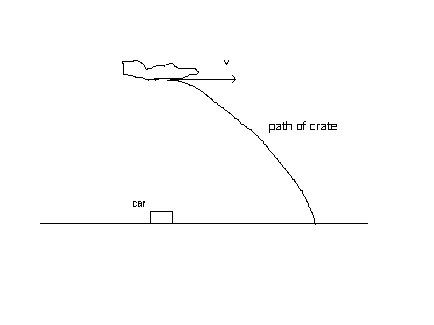 |
|||||||||||||||
28, 29. 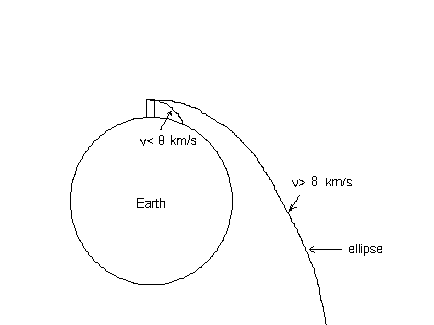 |
|||||||||||||||
37. 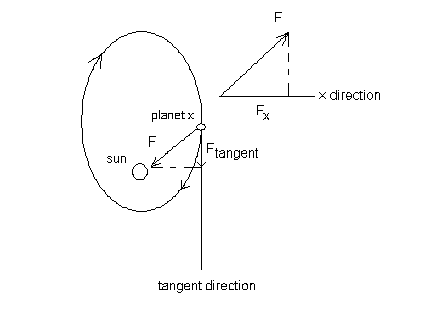 |
|||||||||||||||
|
problems |
|||||||||||||||
| 2. see fig. for exercise 1. (a) H = (1/2) g t2 (b) x = vt, where v = airplane speed. (c) Directly below. Engine and plane have the same horizontal speed v. | |||||||||||||||
4. 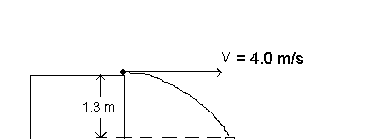 x
|
|||||||||||||||
|
|
|||||||||||||||
|
exercises |
|||||||||||||||
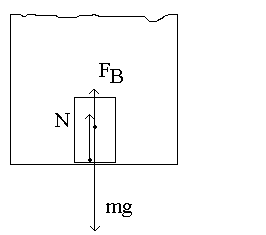
| 23. N is the normal force= force of stony beach floor on the bottom of your feet. FB is the buoyant force. These two forces must balance the weight mg: N + FB = mg. Thus, N = mg - FB . In other words, the force of the beach floor on the bottom of your feet reduced by the buoyant force. | |||||||||||||||
|
|||||||||||||||
32. The statement in the book is totally inaccurate. Take the Titanic
before it hit those ice bergs. That ship was hecka heavy and floated. On
the other hand, take a concrete brick that is clearly much lighter than a big
ship. The brick will sink. Why?. Check out the pictures below: Ship weight Mg
> mg since the Titanic is very heavy compared to the brick of weight
mg. But the buoyant force fB for the brick < mg, which is why
the it sinks. Remember the buoyant force is the weight of the water
displaced by the object. For the ship, the buoyant force is huge ! Why?
Because a huge amount of water is displaced by the inside of the ship. The
weight of this water is a huge FB which is able to balance
the huge weight of the ship: FB = Mg, which is why the ship
floats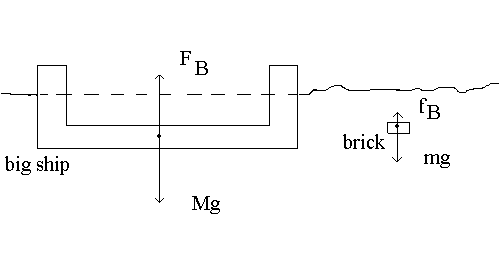
|
|||||||||||||||
37.
Below is the barge with iron scrap of weight mg before it is thrown overboard;
the weight of the barge = Mg, and the buoyant force is FB. FB
must balance the weight of the barge and the weight of the scrap: FB
= Mg + mg. Now when you throw the scrap overboard FB will change to
a smaller value FB' where FB' = Mg. Will the volume
under the dashed line increase or decrease. Hint: FB' = weight of water
displaced after the scrap it thrown over board. Will this volume
increase or decrease if the buoyant force is decreased, and how will the water
level at the side of the barge change???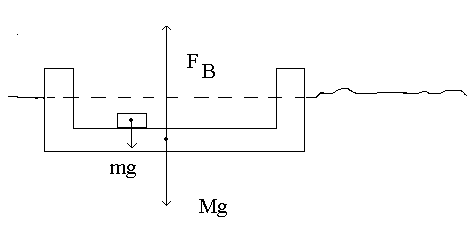
|
|||||||||||||||
|
problems |
|||||||||||||||
|
2. density = mass/volume, where the mass and the volume are given. Note 1 L =
1000 cm3 = 1000 (10-2 m/cm)3 = 10-3 m3 . |
|||||||||||||||
|
|
|||||||||||||||
|
|
|||||||||||||||