|
|
| answers: c b b b b
b a c b a c |
| 2.1
|
| 1.Find f(-2) for f(x) = 13 + x2
. Hint: f(-2) = 13 +
(-2)2.
|
|
a 9
|
|
b14
|
|
c17 |
|
dnota |
| 2. find f(-2) + f(-1) for the previous
problem. Hint: f((-1) +
f(-2) = 13 + (-2)2 + 13 + (-1)2 = 26 + 5
|
|
a 4 |
|
b31 |
|
c0 |
|
dnota |
3. Is this a function ?
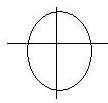 Hint: Does this pass the vertical line test? Can
you draw a vertical line through the shape that crosses more
than once?
Hint: Does this pass the vertical line test? Can
you draw a vertical line through the shape that crosses more
than once?
|
|
ayes |
|
bno |
|
cmaybe |
|
dnota |
4. Is this a function ?
 Hint: Does this pass the vertical line test? Can you draw a vertical
line through the shape that crosses more than once?
Hint: Does this pass the vertical line test? Can you draw a vertical
line through the shape that crosses more than once?
|
|
ayes |
|
bno |
|
cmaybe |
|
dnota |
|
5. Is this relationship a function ? {(1,2), (2,3) (2,-3), (3,4)}.
Hint: Do you see an x - coordinate that appears more than
once? Yes, the coordinate 2. |
|
a yes |
|
bno |
|
cnot
enough information to make a choice |
|
2.2
|
|
6. What is the domain of f(x) = 3x + 7 ?
Hint: There are no denominators and no square
roots ! |
|
a. {x| x is not equal to -7/3}
|
|
b. {x| x is any real number}
|
|
c. {x| x is not equal to 0}
|
|
d. nota
|
|
7. What is the domain of f(x) = 1/(3x + 7) ?
Hint: There is a denominator ! |
|
a. {x| x is not equal to -7/3}
|
|
b. {x| x is any real number}
|
|
c. {x| x is not equal to 0}
|
|
d. nota
|
|
8. What is the domain of f(x) = 1/(3x - 51) ?
Hint: There is a denominator ! |
|
a. {x| x is not equal to -17}
|
|
b. {x| x is any real number}
|
|
c. {x| x is not equal to 17}
|
|
d. nota
|
|
9. f(x) = x2 + 4x and g(x) = 2 - x. Find
(f + g)(0). Hint: Find (f + g)(0) = f(0) +
g(0) = 0 + 0 + 2 |
|
a. 0
|
|
b. 2
|
|
c. nota
|
|
10. For the previous problem , find (fg)(0) = f(0)·g(0)
(Hint :
See #37 for example for the method. See also EXAMPLE 4. Please read the
book to also understand the concept of the quotient (f/g)(x) = f(x)/g(x).
It might come up on a quiz.)
|
|
a. 0
|
|
b. 2
|
|
c. nota
|
|
2.3
|
|
11. Consider a line whose graph is given by 3x = 5y - 15. What is
the y- intercept?
Hint: Set x = 0 and solve for y.
|
|
a. (3,0)
|
|
b. (-5,0)
|
|
c. (0,3)
|
|
d. (0,-5)
|
|
e. nota
|
|
12. Graph the linear function of the previous problem by drawing a line
through both the y-intercept and the x-intercept.
Hints: Find the x -intercept by setting y = 0 and
solving for x. Then draw a line through the x and y- intercepts.
The x-intercept = (-5, 0) |