|
|
| answers: c c b b b b a c |
| 2.1
|
| 1.Find f(2) for f(x) = 13 + x2
|
|
a 9
|
|
b14
|
|
c17 |
|
dnota |
| 2. find f(-2) + f(0) for the previous
problem |
|
a 4 |
|
b31 |
|
c30 |
|
dnota |
3. Is this a function ?
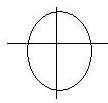
|
|
ayes |
|
bno |
|
cmaybe |
|
dnota |
4. Is this a function ?

|
|
ayes |
|
bno |
|
cmaybe |
|
dnota |
|
5. Is this relationship a function ? {(1,2), (2,3) (2,-3), (3,4)} |
|
a yes |
|
bno |
|
cnot
enough information to make a choice |
|
2.2
|
|
6. What is the domain of f(x) = -3x + 7 ?
|
|
a. {x| x is not equal to -7/3}
|
|
b. {x| x is any real number}
|
|
c. {x| x is not equal to 0}
|
|
d. nota
|
|
7. What is the domain of f(x) = -1/(3x + 17) ?
|
|
a. {x| x is not equal to -17/3}
|
|
b. {x| x is any real number}
|
|
c. {x| x is not equal to 17/3}
|
|
d. nota
|
|
8. What is the domain of f(x) = 1/(3x - 102) ?
|
|
a. {x| x is not equal to -34}
|
|
b. {x| x is any real number}
|
|
c. {x| x is not equal to 34}
|
|
d. nota
|
|
written problems |
|
9. f(x) = x2 + 4x and g(x) = 2 - x. Find
(f + g)(1) = 6 |
|
10. For the previous problem , find (fg)(1) = f(1)·g(1) = 5 |
|
2.3
|
|
11. Consider a line whose graph is given by 3x = 5y + 15. What is
the x- intercept?
(5, 0) |
|
12. Graph the linear function of the previous problem by drawing a line
through both the y-intercept and the x-intercept. Draw
a line through x-intercept (5, 0) and and y-intercept
(0, -3) |